Thursday, April 27, 2023

Post 3: The History and Workings of the U.S. Supreme Court

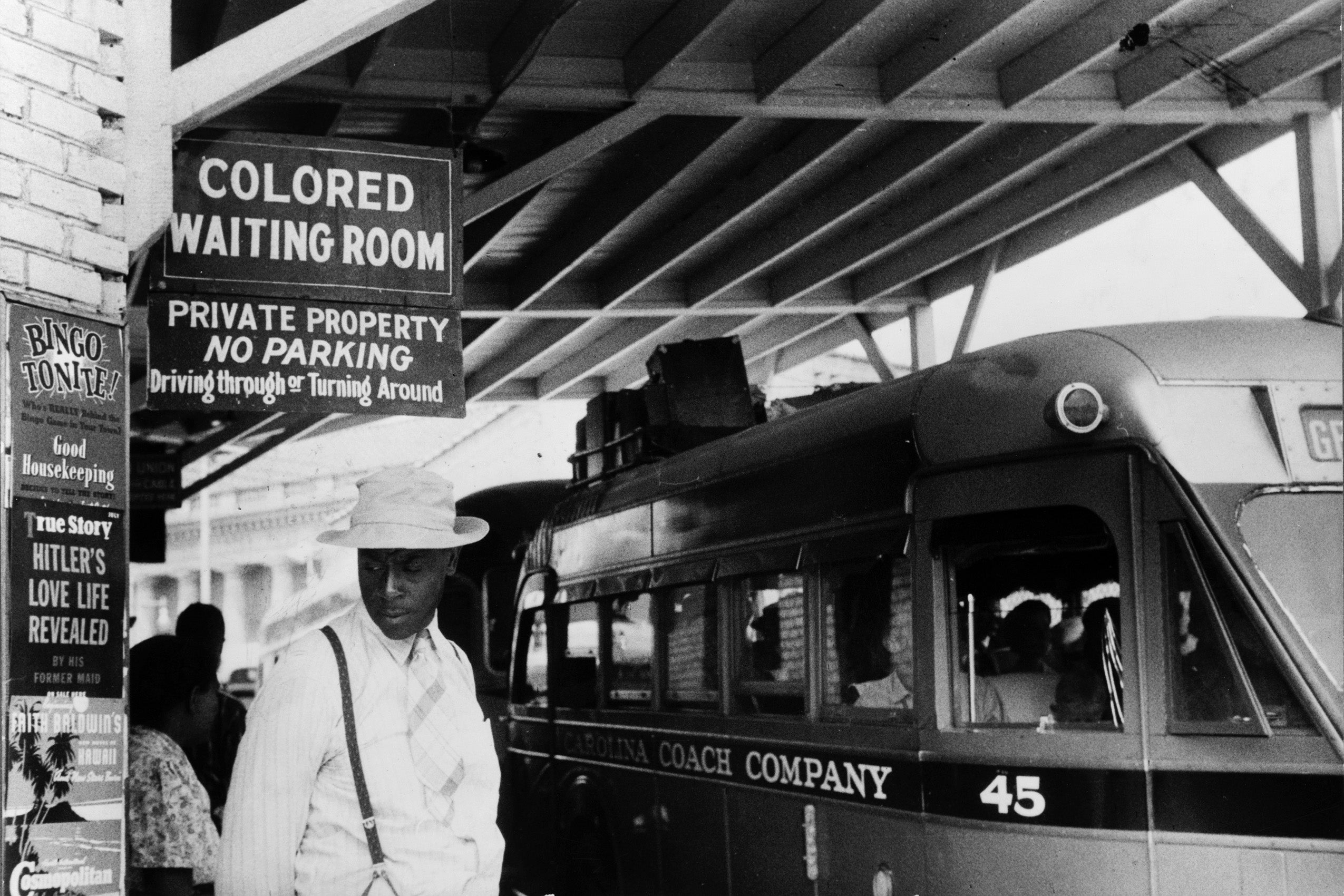
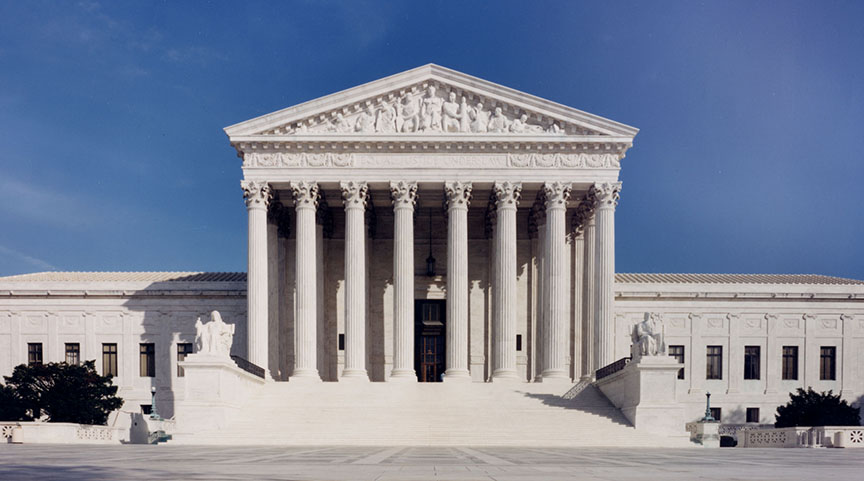
     The United States Supreme Court was established under the JudiciaryAct of 1789 to be the court of "last resort" for those seeking justice. It's first landmark case was Marbury v. Madison, which took place in 1803 and helped establish the principle of Judicial review. This allowed for the Supreme Court to rid of laws that people felt were unconstitutional, as well as review the actions of other branches of the government to make sure all were following the constitution properly. In 1857, the landmark Dred Scott v. Sandford case occurred, where the court determined that African Americans, both enslaved and free, did not qualify as citizens of the United States. In 1896, the case Plessy v. Furgeson established the term "separate but equal", where racial segregation was upheld in place.     In 1954, Brown v. the Board of Education occurred, where it was argued that racial segregation in public schools was unconstitutional. 
    Although the Supreme Court may not directly make the laws, it does play a role in the overall law making process. The decisions and interpretations of the constitution they make together as a whole has great influence on laws and their outcomes. For example, they were able to declare the action of segregation of public schools unconstitutional in the case of Brown v. Board of Education. Because of their ruling, the Legislative branch was able to amend the law. 


                Another part of the Supreme Court that we became quite familiar with in class is the idea of "Certiorari". This is a petition to the court to hear the case again, regardless of previous ruling.  

Tuesday, February 21, 2023

8 Values of Free Expression

Freedom of Speech is not something in which we've always had the pleasure of being able to use. Up until the early 19th century, it was common for those to be censored if it went against popular opinion/ the government. It is because of this that the breakthroughs of Jefferson, Madison and others are so greatly recognized. Jefferson was one of the authors of the document that came before the First Amendment itself, serving as an early version before it became official. Madison was clearly pro-First Amendment, as he refused to silence the press about the war. Through the emergence of the First Amendment, we as a country have grown to appreciate the rights that we deserve. 

Of the 8 Expressions of Free Value, I feel that Individual Self Fulfillment, the idea by C. Edwin Baker, resonates most with me. It elaborates on freedom of speech stating that it allows us to express our own creative identities. Without this, we would not have the different types of creative writing styles we have all come to know and love. 

We can connect the modern-day use of social media to the idea of Individual Self Fulfillment. On these platforms, you can choose to display your own style/aesthetic, which allows others to gain insight on who you (want to) display yourself as. This takes us back to the idea of Individual Self Fulfillment as it was used to express identity before the days of sharing a photo on the internet. 

Sunday, February 5, 2023

BLOG 4 EOTO: The Invention and History of Paper

We all know and love paper, for what would our daily lives be without it? No textbooks, no money, not even the coffee cups from your favorite cafe. Though you may not realize it, the world as we know it today may not have been the same if it were not for the discovery of this super important product.

The initial creation takes us back over 2,000 years ago, where a man in China by the name of Ts'ai Lun mixed rags, water, hemp, and mulberry bark to create a thick pulp. He would then lay it into thin sheets, where it would dry in the sun until it became a writeable surface. Its predominant use was for educational scripts and traditional scrolls. Before, silk and bamboo were the most popular vessels for writing but were eventually considered too expensive and heavy. Fast forward 300 years, Ts'ai Lun's discovery had been shared across Asia and the Middle East and became extremely popular. So much so that a BAN on printing was implemented in the 16th century due to the worry of the spread of Islamic and other religious texts. Paper eventually made its way to Europe a mere 500 years later, however, was all the rage once discovered. In 1690, the United Stated received its

first paper mill, and we have watched it grow from there. 


Others such as the Egyptians were able to manipulate paper in such a way that they were able to create boats, sandals, and even forms of art. They adopted their own recipe for paper, or “papyrus” as they called it. They would cut the stem of a water plant, stamp it flat, then let it dry to create the writing surface. We can see plenty of fine examples of this in history museums throughout the world today, as the history of writing and paper itself is extremely important.  


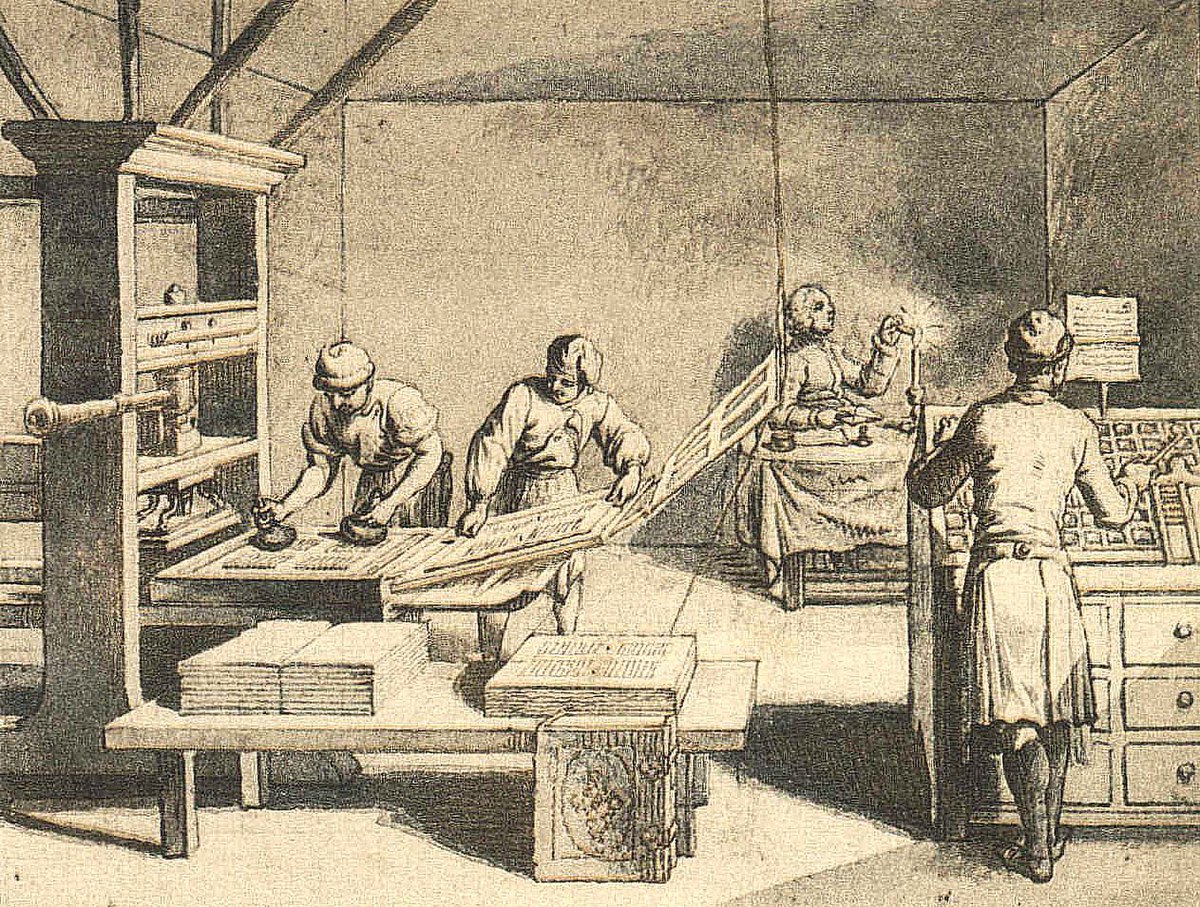
Paper has resulted in the idea of mass-printing, which over time has become one of the largest sources for distributing information. Things such as newspapers, the bible, and other religious scriptures, textbooks, you name it, all comes back to paper.  


Without this imperative invention, literature and education would be nowhere near as advanced as they are today, for the ability to read and write has expanded the boundaries of our species greatly. We found a way to set up universities, public school systems, and even provide those students with the necessary texts to achieve what the government has considered a “base level education.” We take tests, quizzes, and notes on it every single day without even batting an eye or acknowledging its history.  

Overall, through great trial and error, we as people have been the driving force behind paper. What it is today is so much more than Ts’ai Lun ever could have imagined back in 100. His invention has influenced the entire world as we know it, and who knows- maybe we wouldn’t even be here without it! 


Post #2: Issues of the Digital Age

     We live in a world that is absolutely dominated by technology and the digitization of everything. Although we still hold great value in physical resources such as books and newspapers, the internet has predominantly taken over. 

        While this has benefitted us greatly in terms of new discoveries, easy access of information, etc., it has also brought turmoil to many. Over the past few years, it has become evident that both the internet, and the devices in which we use it on, may be used to monitor what we do, who we call, and what we say. 

    You might ask, how exactly does this affect me? The answer; though it may not directly affect you, does it not wrack your nerves that every single google search you make could be monitored? Every phone call you make recorded? It leaves us with these feelings of uncertainty and distrust, for our own government is spying on us.  

    Now that this information is out in the open, most feel that the government should be taking action to prevent this. In recent years, websites have begun allowing us to option to give them permission to use our locations, as well as any other data they may have collected without our consent. Aside from that, things have been relatively hush hush. 

    As citizens of the United States, we have the right to stand against this. Encryption services such as Telegram and Signal allow for communication via text without others being able to access it. Specific phones such as the Solarin from Sirkin Labs uses technology that only administers data research to those in which are granted access by the account owner. You could also establish a Virtual Private Network (VPN) in which is a service that encrypts all data that enters and exits your cellular device. 

    As scary is it is that our own government is doing this to us, we have the opportunity to take a stand against it. 

Wednesday, January 11, 2023

Top 5 News Sources

     In today's day in age, it is extremely common for one to read, listen to, or view their news through use of technology. I frequently use applications and websites such as Google, Apple News, TikTok, Snapchat, and Instagram to see what exactly is going on in the world. 

Google

    Google is a search engine, and a fantastic source with an abundance of information. Almost instantly after an event is to occur, whether that may be a touchdown in an NFL game or a celebrity death, there are articles all over the platform regarding said occurrence. When main-stream news outlets such as Fox News, ABC News, CNBC, and post news to their websites, Google collects that data and compiles it into the "Google News" list. Here, you may find all of the happenings around the world from millions of sources. 

Instagram

    For the people of my generation (and I'm positive many others as well), Instagram was, and still is, a revolutionary application. We can post pictures to our personal accounts, as well as like and comment on others. It allows us to socialize with our friends, family, and even celebrities online. Most of the major news outlets stated above have their own Instagram account, in which they can share news to a broader spectrum of people. 

Snapchat

    What started out as a fun way to communicate with your friends quickly turned into much more than so. Snapchat is a social-media app that allows you to send pictures and videos to friends, as well as share moments to your "story". Because of the reach it has across our generation, many major news outlets have began operating "business accounts", in which they allow users to subscribe to their favorite accounts. I for one know that I discover a majority of my news through my subscriptions on the app. 

Apple News

    Apple News is a website and application created by Apple. It compiles all the latest news from every source and allows you to choose what you want to see based on what you like. It eventually builds an algorithm based on what you do and don't like, and aims to supply you with a completely "personalized" news feed.  

TikTok

    TikTok is a social media app that allows you to post up to 3-minute long videos. It allows people to voice their opinions (within reason), and is commonly criticized for being a Chinese-owned company accused of spying on American people. It is algorithm based, therefore it shows you videos similar to ones you "like" on the app. As many of the others above, major news platforms have their own accounts in which they distribute their content through. 

Post 10: Age of AI

     In class today, we watched a PBS documentary titled In the Age of A.I. , in which we were walked through all the ins and outs of A.I. a...